5 Tips to Help Your Child Start Talking

Parents feel great pride and joy when hearing their children speak. They revel in thinking back to what their child’s first word was or the first time they said Mama or Dada. But for some parents, lack of early speech skills can be concerning. Some children may present with challenges that cause speech delays. Whether you are a parent anxiously awaiting your infant’s first word or a parent who is longing for more communication from an older child, here are some low key methods that can be incorporated into your everyday routine that you can use to stimulate verbal communication.
1. Read a Book
Sharing a book with your child can be a great experience. It is a special time that allows you to quietly focus on something together. It can feel good to cuddle up on the couch or to read a bedtime story together. You can start reading to your child in infancy. Babies begin to respond to familiar voices at a very young age or even in the womb. Reading also encourages language development. Making picture board books available for small children is a great way to start. I prefer books with real pictures. When your child begins to show interest in the pictures, draw attention to them by pointing to or rubbing the picture. The child will often imitate what you do. Label some pictures verbally each time you look through the book.
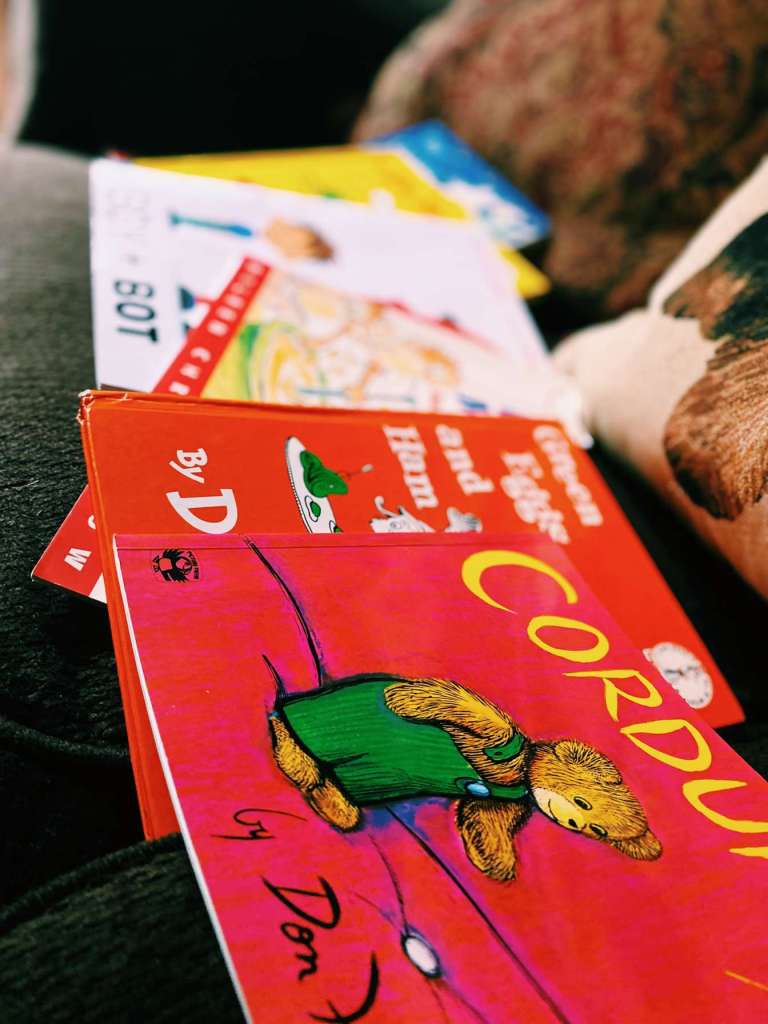
I like to add structure by starting on the cover and going page by page from front to back, labeling at least one item per page. This is also a good way to introduce left to right progression. When doing this, ask your child to “Point to the bird,” or say, “Where is the horse?” When you do this, you are challenging their receptive language skills. Parents are often pleasantly surprised by their child’s receptive vocabulary when they begin asking their child to identify pictures. You could begin with books that only contain pictures, but simple story books are also appropriate for toddlers. In the early stages, reading or looking at a book with your child does not require him/her to have the ability to speak because receptive language development precedes expressive language development. When expressive language emerges, you can begin asking simple questions like, “What is this?” or “Who is holding the flower?” Your questions and the complexity of the books you choose should evolve as your child shows a higher level of understanding.
Receptive language is the ability to understand information. It involves understanding the words, sentences and meaning of what others say or what is read.
Expressive language means being able to put thoughts into words and sentences, in a way that makes sense and is grammatically accurate.
2. Sing
I have met many parents over the years and most often, their biggest concern is about communication. It can be very frustrating for a parent when there is an issue or delay in speech development. They ask, “Why isn’t my child speaking?” The truth is, there are many reasons for speech delays. If your child is exhibiting challenges in the area of speech, I suggest that you discuss it with your pediatrician and, depending on your child’s age, seek either an early intervention evaluation or school speech evaluation. No matter what the reason, when working with people who are experiencing language delays, I have found music and singing to be very effective. If I were to sing to you, “Old MacDonald had a farm,” then stop short, wouldn’t you be compelled to continue by singing, “E I E I O?” If you are familiar with the song, as most children are, you don’t have to think about what to say next, which makes it easy to blurt out the line. Because singing is fun and low pressure, this strategy of singing and stopping short works well for people who have processing or behavior challenges. Make sure that when you stop singing, you are giving the child ample time to continue the song before starting up again yourself. The child can chime in to fill the silence, which is akin to following a direction or prompt without even being aware that they did something. When a child with speech delays first begins to sing along, the parent should shower him/her with excitement and praise. It is a very rewarding experience and most often the child will repeat it again and again if you continue to lead the singing. It is important to remember that emerging speech does not have to be perfect. If your child is not speaking regularly, but will hum or say “ah,ah,ah,ah,ah” in place of “E I E I O” consistently, you are winning!
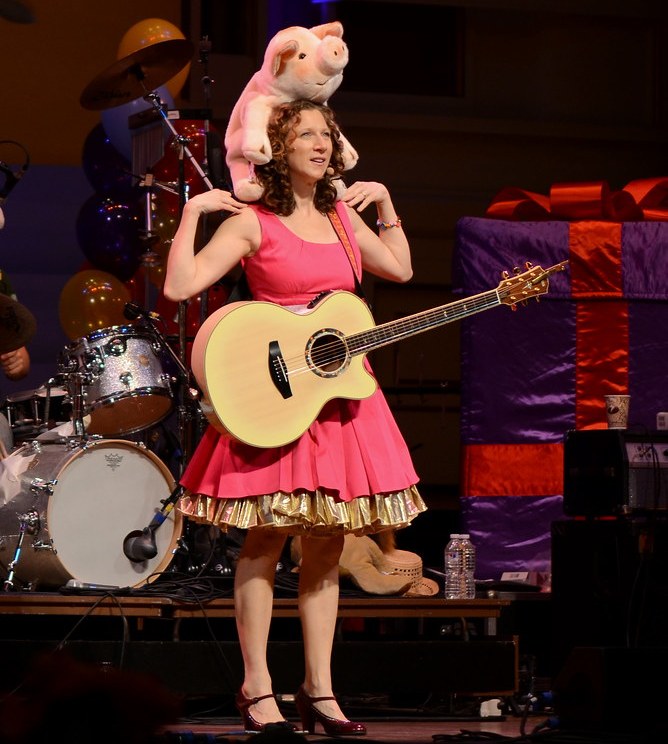
Songs with movement are great because each movement paired with a word of the song becomes a visual cue. You may begin similarly, by singing with your child and stopping short so that he/she may fill in the words while practicing the movements. Later, you may just introduce the movements and your child will be motivated to sing. “If You’re Happy and You Know It,” is a great song for this. Begin by singing “If you’re happy and you know it,” while raising your hands spread wide apart while making eye contact and smiling in anticipation for what is coming next. Then pause with your hands up to see if the child will vocalize the next part. If they do, then sing and clap together. If they do not sing at first, it’s fine. Continue modeling until they are ready. Singing throughout the day is beneficial. Make it part of your routine. Later, you can fade the verbal prompt (singing) and it gives the child independence.
3. Count
Another way to encourage speech is to make counting a part of your everyday routine. For example, if you make it a habit of counting the stairs in your house every time you come and go, your child is likely to pick up the habit. If you say “1, 2, 3” just before lifting up your child, he/she is likely to repeat it. If you play any chase, tickle, or hide-and-seek type of game where the child anticipates a ten count, it will create an excitement that children are likely to copy. Putting together counting with movement is very reinforcing and can easily be embedded into your routine. Consistently pairing everyday activities with counting will promote language development.
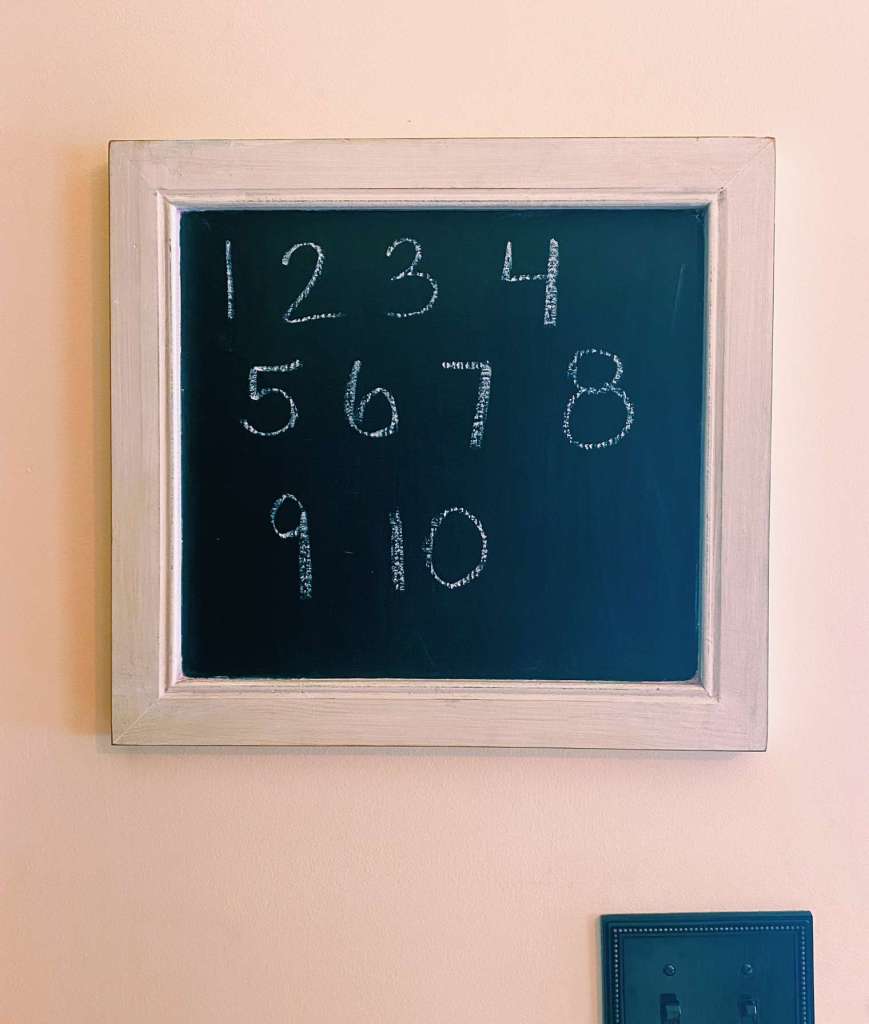
It is also beneficial to count during other types of play. Counting can be modeled while stacking blocks or rolling Play-Doh balls. As with any new task or skill, when introducing counting into your routines and play, I recommend doing it passively at first. Just have fun with it. Count in an animated sing-song way. When children see their parents or caregivers enjoying something like counting or singing, they are often driven to imitate it. Soon after, you can attempt to stop your counting and your child is likely to continue to completion. Eventually, your child could begin counting on their own once they associate counting with certain activities.
4. Make Animal Noises
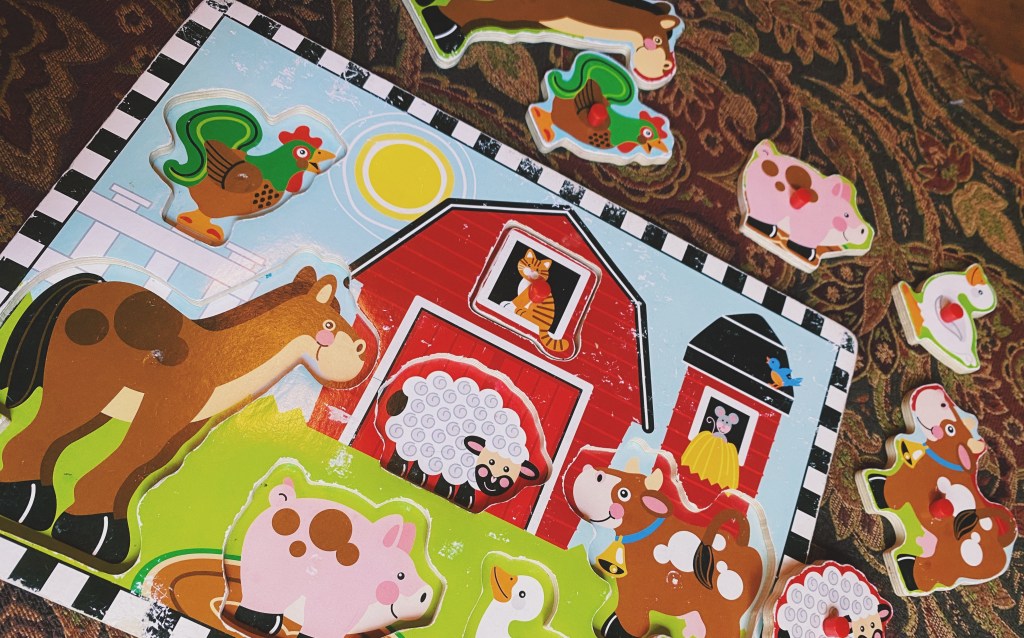
A common theme among children’s toys is farm animals. If you have a child, chances are that you have some farm animal items lying around the house. When a child is reluctant to speak, playing with farm animal toys, puzzles, or books provides a great way to introduce sounds that can later be shaped into words. It really helps if you are willing to be silly. Instead of saying moo in your everyday voice, try changing your tone and stretching out the /oo/ sound, mooooooooooo, and have fun with it. Be animated, crawl on the floor, jump up and down; whatever gets him/her excited to participate and repeat sounds again and again. When we are silly or behave in a way that is unusual, it tends to catch the child’s attention more. You can also include “Old MacDonald Had a Farm” in your play. Matching the animal toy or puzzle piece to the animal making the sounds in the song is a fun way to encourage vocalizations. When a child becomes comfortable saying baa, moo, neigh, and other animal sounds, you have paved the way for those sounds to be used in other words such as mama, you, and play.
5. Validate their Efforts
When speech is emerging, words can be unclear and difficult for parents to understand at times. Although articulation/clarity should eventually be addressed, when speech is new, we should embrace it in any form. A great way to do this is by repeating back to the child what they said, even when it sounds like complete nonsense. You can do this in two ways. If your child is using jargon, and they say aeolee, you can simply make eye contact and repeat aeolee back to them. When you acknowledge and validate what was said, children are often encouraged to keep trying. You can also try shaping what was said into a real word. In this way, aeolee can be interpreted as “ravioli.” You can repeat back “ravioli” or celebrate by saying, “You said ravioli! Good talking!” I do this even when it doesn’t make complete sense. It is rewarding for a child to feel like they have actually said something.

Another strategy is to mimic conversation. It may sound something like this:
Child-“Aeolee.”
Parent- “Oh, you want some ravioli?”
Child- “Ah la jah meh.”
Parent- “And you want some juice with it? Great idea!”
By giving meaning to an emergent speaker’s vocalizations/jargon along with your undivided attention, you encourage future exchanges and build confidence by showing that what was said is important to you. Comedian DJ Pryor does a beautiful job of engaging in this way with his son Kingston in this video that went viral https://www.youtube.com/watch?v=AY35eXTKVLY
These 5 tips are meant to be fun. There are many times when a parent or caregiver will find it necessary to give directions and have to follow through with prompting and demands. These suggestions are meant to remove the pressure and encourage a more lighthearted exchange. Utilize these suggestions while you enjoy spending some time together or embed them into your daily routines. Keep these interactions positive and consistent and you may be pleasantly surprised by the response that you get from your child.
Thank you for reading!
 Win @ Parenting