Shaping Behavior With Token Boards

We have all heard parents resort to yelling, “Because I said so!” in a frustrated response to their child who is questioning why he/she is being told to do something. Maybe we have even done it ourselves. It is often blurted out when our patience has been tried. We are tired of explaining and just want whatever it is to be done already! Many times, speaking sternly and enforcing boundaries is enough to compel a child to comply with requests, but there are times when, despite parents’ yelling, pleading, and threatening to take away desired items, they are still met with obstinence or misbehavior. If poor behavior becomes a reoccurring theme, it may be time to introduce a token economy system.

What is a Token Economy System?
If you have ever held a job, you have participated in a token economy system. You worked and then you were paid. Your paycheck was the token that you were working for. Knowing that the work that you were doing would result in a paycheck, you were motivated to show up and complete the work appropriately. We do it with older children in the form of allowance when they are paid for completing their chores. Both are examples of simple token economy systems. For children who are not socially motivated to comply just because it makes Mommy and Daddy happy, or for those who do not have the understanding or desire to earn money, an individualized token system can be put in place to induce compliance in a more positive way.

How a Token System Works
In its simplest form, a token system is often introduced with the child completing a single task to earn a single reward. For children with learning challenges who engage in Applied Behavior Analysis (ABA) or behavior therapy in a structured setting, the task may be putting a single shape into a shape sorter and the reward could be a single mini M&M candy. In this scenario, the child receives the M&M immediately after successfully complying with a directive. This type of intense delivery of 1:1/trial:reinforcer is usually carried out in a structured classroom setting or through an in-home program facilitated by a behavior therapist. As a child develops an increased understanding of the token system, the gratification can be gradually delayed by increasing the amount of tokens necessary to earn a reward. Another way to delay the gratification would be to increase the amount of tasks that a child is required to complete before receiving the token. For example, instead of earning an M&M each time a single shape is put into the shape sorter, it may now be necessary for that child complete the whole shape sorter activity to earn a single M&M. Later, the child may have to earn 3 tokens before receiving the prescribed reinforcer (M&M). There are endless variations of task to reinforcer ratios that can be modified in an effort to achieve the desired response. In my experience, when a token system is utilized consistently, children often recognize the pattern quickly and become motivated to earn their reward/reinforcer.

Types of Token Systems
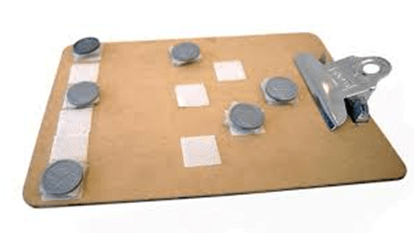
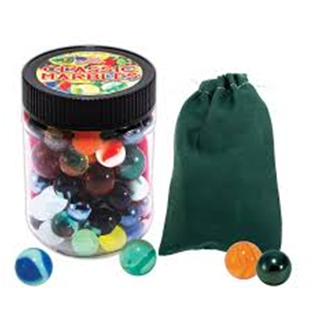
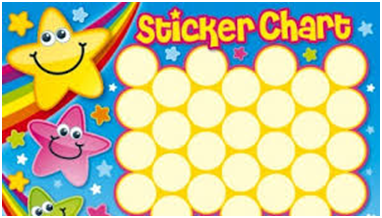
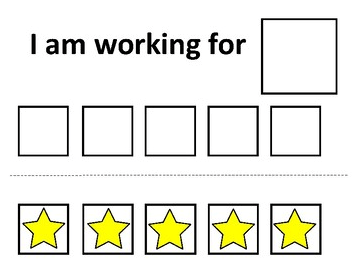
A token system can be as simple or as fancy as you wish to make it. You can use paper, a chalk board, or a dry erase board and draw stars or smiley faces to indicate that a token was awarded. A sticker chart can also be very motivating. Pom-poms or marbles representing tokens in a jar can also provide a fun visual. In the school setting, we often use laminated folders with laminated tokens and visuals representing reinforcers. I have also used clip boards with Velcroed pennies for tokens. How consistently you use the token board is more vital to its success than the style of board itself. Choose one that is comfortable for you.
Using a Token System to Simply Encourage Good Behavior
A token system can be utilized to instill good behavior in general. The level of understanding of the child must be taken into consideration as you decide how you will implement a token system. For an example, let’s say a 7-year-old boy presents with some mild, mischievous and impulsive behavior and may benefit from a sticker chart. This system could entail having the boy earn 3 stickers on his chart at specific times during the day in order to gain a reward at the end of the day. As the boy exhibits appropriate behavior, one sticker would be awarded after breakfast, one after lunch, and one after dinner. When he is successful, he would be rewarded with Play-Doh after dinner. In this situation, the boy would benefit from being reminded of the chart at the start of each day, and he should be able to pick the reward that he will be working for as part of a consistent routine. It is most effective if the parent or caregiver references the sticker chart throughout the day, especially when the boy seems to be on the verge of misbehaving. It is important to keep it positive, saying things like, “Don’t forget, you are working for Play-Doh after dinner. Make a good choice. I know you can do it.” Once you get the ball rolling, you can modify the token system. If you find that waiting until the end of the day is too challenging, you may want to give stickers more frequently and allow Play-Doh time after lunch and dinner. This type of token system can provide a great incentive for the child with mild behavior issues. Each child is different. If you do not get the desired results at first, do not give up. You may just need to fine-tune the way you are utilizing the token system to suit your child.

Using a Token System to Target a Specific Behavior
To increase a specific behavior by utilizing the token board, you would pair a token with a desired behavior. Consider targeting a very specific behavior with younger children or individuals who may not have the ability to understand or remain compliant for an extended period of time. They may not be able to tolerate waiting to receive a delayed reward. For example, when potty training, you would award a token each time your child uses the toilet effectively. When he has met criteria for the amount of tokens required for gaining his reward, celebrate and give him the reward immediately. If you choose to target a specific behavior like this, remain consistent. In this example, if your child refuses to pick up toys, but still remembers to use the toilet, you must acknowledge their success and give the potty token. The token system will not be effective if you blur the lines of when they can and cannot earn a token based on other behaviors.

To decrease a specific behavior, the token system can be utilized by granting a token for each period of time that the child is able to abstain from the negative behavior you are targeting. This can be used to discourage aggressive behaviors. If a child has gotten in the habit of hitting her sibling every time there is a squabble, put a token system in place. Reward her at regular intervals for keeping self-control or communicating appropriately (using her words) instead of resorting to physical outbursts to get her way. Like in the example above, it is important to discuss with the child on her level how the tokens will work and allow her to choose the reward that she is working for. You will need to tailor the time intervals to her level of comprehension. It is helpful to keep the frequency of reinforcement high when the system is newly introduced. This enables her to understand the expectations and feel successful. Feeling successful and confident will help her continue to improve her self-control and allow her to remember to communicate when she is angry.

Choosing a Reinforcer
Imagine you worked hard all week and were looking forward to collecting your paycheck, but instead at the end of the week, your boss gives you a coupon for a month’s supply of donuts. How would that make you feel? You may feel angry at your boss. Donuts are great, but all week while you were working, you were thinking about what you were going to do with the money from that paycheck. You may not want to work as hard the following week if you are only going to receive more donuts instead of the paycheck that you desire. Your child may have similar feelings if you choose the reinforcer for them or forget to give them a reinforcer all together. For best results, the child should choose what he/she is working for before each period of implementing the token system. As a parent, you can limit the choices, but make sure there is some variety. Your child may choose drawing with markers as a reward for three days in a row, but on the fourth day he/she may want to listen to his/her favorite song for a reinforcer. Do not assume that the reinforcer will stay the same. Whatever motivates a child can be used as a reinforcer. I had a student who collected receipts. One of the options on his token reward system said receipt. On a high shelf in my classroom I kept a large plastic bin of receipts for him that had been donated by teachers. If he chose to work for receipts, he would be able to “shop” for a receipt from the bin once all of his tokens were earned. Most of us see receipts as garbage, but to him they were treasure.

Delivering a Reinforcer
Imagine you work hard all week again in anticipation of a paycheck on Friday, but when Friday comes there is no paycheck. You seek answers, but the billing department has gone home for the weekend. It’s as if they completely forgot about you and all of the hard work you did. How would that make you feel? A child can have similar feelings when delivery of tokens and reinforcers is unreliable. I understand that life is busy and there can be many distractions, but when you decide to launch a token system, I encourage you to follow through. Consistency is very important, especially in the early stages of learning the routine, expectations, and rewards of the system. Setting the child up with a token system, then dropping the ball on following through can do more harm than good. For best results, make sure to introduce the system at a time when you have the availability or support to deliver each token and reinforcer in a timely manner. When a predictable and reliable token system is carried out, children can develop a feeling of success and take pride in their accomplishments.

I whole-heartedly believe in the effectiveness of token systems. I have used them in the classroom and in homes while working with children of various ages and ability levels. I have seen aggressive, nonverbal children change their behavior with the help of token boards. In some cases I know that the self-control and confidence that these individuals have gained as a result of the implementation of a structured token economy system has changed their lives.
Tips

Now that you understand the basics of implementing a token economy system, here are a few tips to ensure your success.
*The child should always know when they have earned a token. Make sure you get her attention or have her apply the token herself if possible. You can say something like, “You are doing a great job at___, give yourself a sticker.” It is also helpful to draw her attention and make a note of how many more she needs to gain her reinforce. “You have earned 3 tokens, you only need two more to get your fidget spinner (reinforcer).” Try to be specific, but not so wordy that you cause confusion.
*Keep it positive! Avoid taking tokens away. I have had much more success when positive language is used, even when behavior challenges arise while implementing the token system. If the child begins to falter, say something like, “You did not earn a token this time, but I know you can do it. Let’s try again.” You will get better results by encouraging than you would if you say something like, “You are bad. I am taking all of your tokens away!” The first quote is hopeful and instills self-confidence. The second quote is deflating and can cause the child to give up or have a tantrum.

*Whenever a new demand or boundary is introduced there is often a surge in the undesired behavior from the person experiencing the demand or boundary. Please do not be discouraged. Just stay calm and continue to implement the token system. You may want to be more generous with your tokens at first. Feeling successful is a great motivation to continue repeating the desired behavior. Let your child experience success. Over time the child will begin to understand the cause and effect. They will discover that they have control of earning tokens and rewards through their behavior.
*While implementing a token system can be cumbersome, if you put in the work in and remain diligent, consistent, and positive, it will be worth it and you will acquire the desired results. Then you can begin fading. It is best to fade the system gradually rather than just drop it.
*Praise and celebration are very important. Make sure you are encouraging your child in between earning of tokens. Let them know how proud you are of their hard work. Try to be animated and give high fives, give hugs, dance, or whatever your child responds to in order to keep them excited to continue earning rewards.
Thanks for reading!
I welcome your questions and comments:
Winatparenting@gmail.com
 Win @ Parenting